Editorial team ·
A one-page worksheet for discussing a sports clip
Updated:
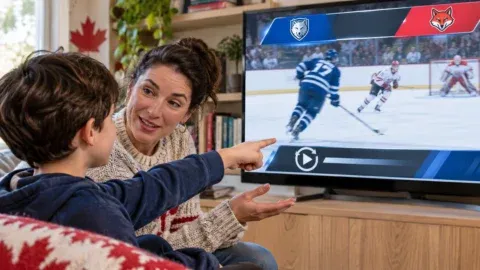
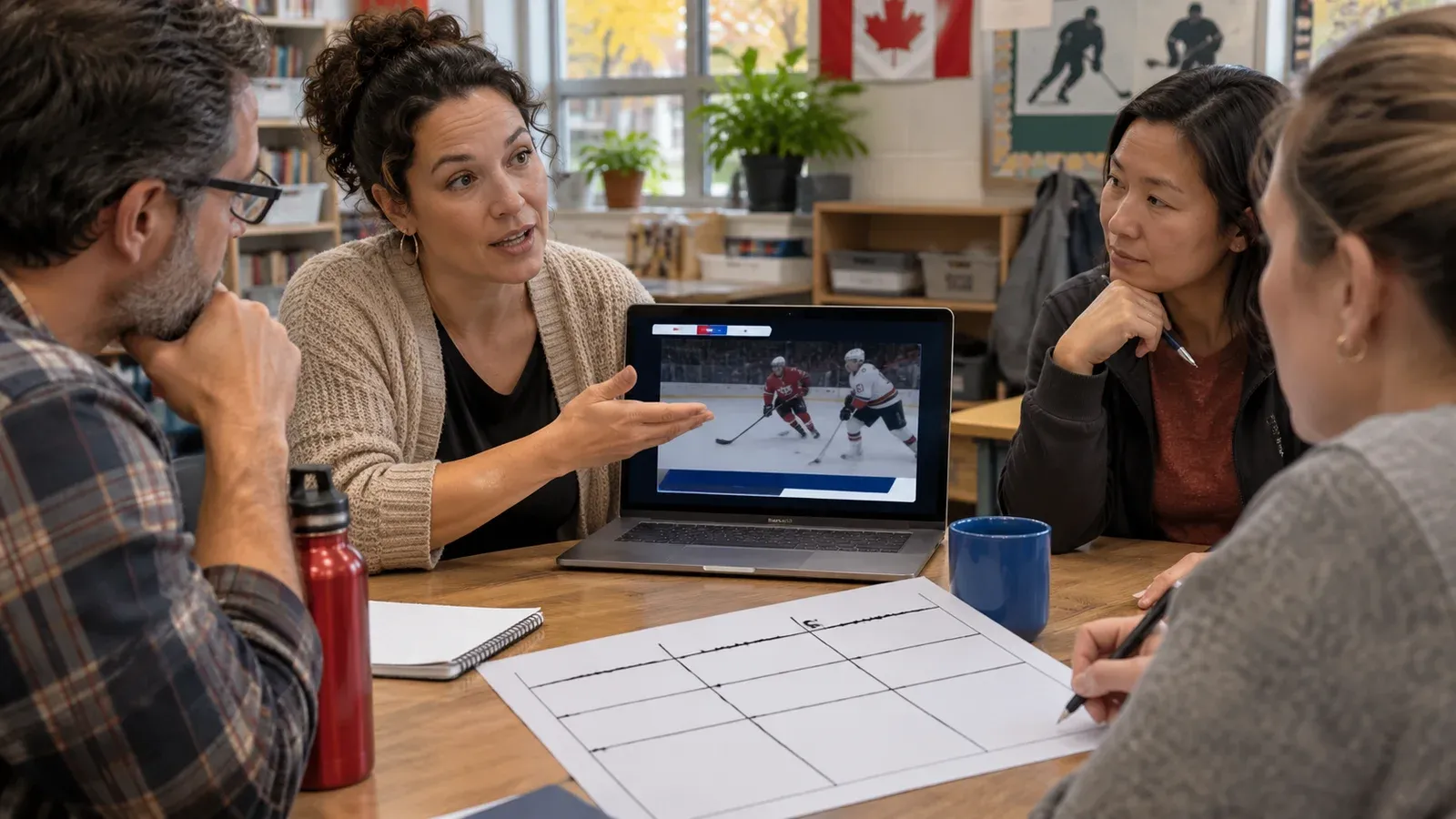
A group has ten minutes before pickup. You have a short clip in mind, but the usual worksheet takes longer to explain than the clip takes to watch. Draw three columns on one page: what we saw, when it appeared, and what we would check. Then work through one example together.
Build the page around one observation
For the practice clip, draw a score at the top and a sponsor credit under a replay. In the first row, write “a name under the replay.” In the second, ask how we know it is connected to this part of the programme.
Read the sponsor credit out loud or print a transcript. People who miss the lower strip of the image can use the same words as everyone else. At the discussion stage, ask participants where they found the clue.
Use two examples at most for ten minutes. If a participant mentions something from a different game, note the question for later instead of trying to add a new clip that some people cannot see.
Keep the last column for things you still need to check. A question like “Who put this text on screen?” can stay open if the example gives no answer. That makes the sheet useful for a later comparison.
| What we saw | When | Question to check |
|---|---|---|
| Score changes | After the play | Which team got the point? |
| Replay appears | Immediately after the score | Is this the same play? |
| Presented by line | Under the replay | Which part of the programme does the label name? |
Ask a question the group can answer from the material
- Set the group up
- Choose one short example and provide its words in print.
- Explain the three columns in one sentence.
- Compare observations
- Read a row aloud and ask where the clue was.
- Leave unresolved details in the question column.
Questions and answers
- How long should the clip be?
- Use a short example the group can watch twice within the time available.
- Can people answer out loud?
- Yes. An adult can write the common notes while participants point to the relevant part.
- Do I need a real ad for the exercise?
- A fictional sponsor credit can teach the same observation without repeating a real promotion.