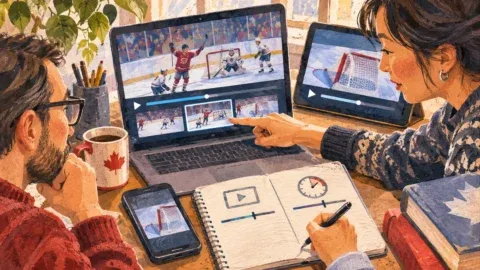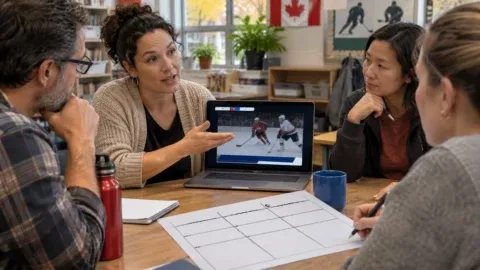
A one-page worksheet for discussing a sports clip
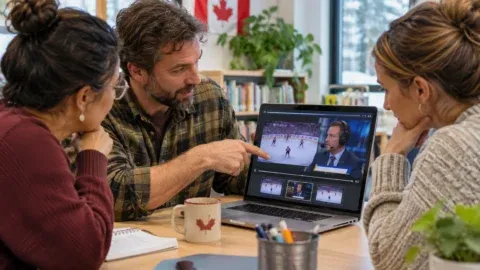
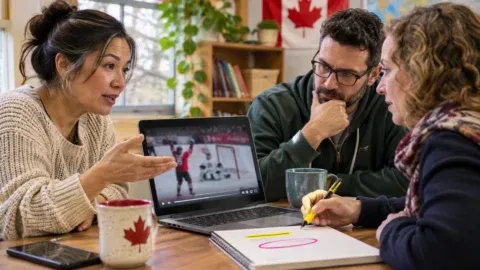
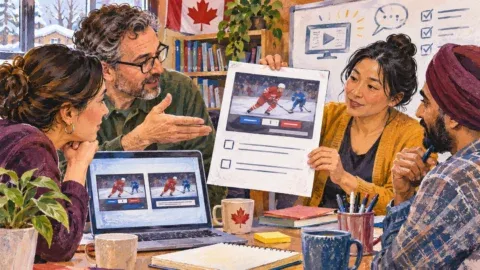
Give an adult-led group three places to write down a moment, a clue, and a question. Use a made-up broadcast so everyone sees the same material.
Focused explanations of Alberta · Parent and educator resources: documents, observations and practical situations. Reference pages provide the broad reading route; the cards address individual questions. Worked examples are not actual event results.
Continue reading
A parent’s guide to sport sponsorship: identify the message first · An adult-led media worksheet: scene, claim and source · Recognising paid messages during sport: labels and context · Discussing betting ads after a game: questions for adults
Give an adult-led group three places to write down a moment, a clue, and a question. Use a made-up broadcast so everyone sees the same material.
A comparison of reporting, branding and invitations to act, with a source ledger and a fictional broadcast example.
Check the opening card, on-screen strip, and final frame of a fictional segment. Each location can give a different clue about who is speaking.
Compare two edits of an invented clip and look for changes in wording, speaker, and on-screen labels that help identify commercial copy.
Try a short way to pause a family or parent-group discussion, save the point people disagree on, and come back when there is time.
Sort three lines of fictional sports commentary and see which can be checked against the match record and which express an interpretation or forecast.
Adapt a shared viewing worksheet for classroom time, varied reading levels, and students who prefer to participate without speaking to the whole group.
Wimbledon identifies Rolex as Official Timekeeper. That attributed role differs from a team label, an examined broadcast placement or a recommendation to buy or bet.
Follow one clip back to a score update and a replay credit. Record the frames before and after so another viewer can find the same moment.
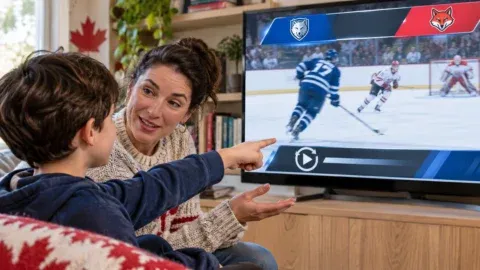
Compare two fictional clips of the same game. Look at who published them, why they were made, and which parts of the match they show.
Related reading from other sections of this website.
A practical source check for parents and educators: visible branding, published partnerships and discussion questions.
A ready-to-copy worksheet for describing a sports message before discussing its purpose or making a sponsorship claim.